Men's Swim Trunks Guide: Fit, Style & Fabric
Introduction
Swim trunks are one of the few garments where fit, fabric, and style are all equally visible — there's no jacket to adjust, no layering to correct a poor choice. What you wear at the beach or pool is what you present, which makes the decision more consequential than most men treat it. The right pair of swim trunks creates a clean silhouette, moves well in and out of the water, dries quickly, and holds its color and shape through a full season of use. The wrong pair does none of these things, and the difference is immediately apparent.
This guide covers everything you need to make the right choice: the styles available, how to match cut to body type, what fabric properties actually matter, how to choose colors and patterns that work for you, and how to care for your trunks so they last. Explore the full men's swimwear collection for styles across every cut and aesthetic covered in this guide.
Styles of Swim Trunks: Understanding Your Options
Board Shorts
Board shorts are the most relaxed style in men's swimwear — originally designed for surfers, they typically extend to just above the knee with a loose, athletic fit. They're characterized by durability, a mesh lining, and quick-dry construction that makes them practical for active beach days. Board shorts work equally well in the water and on land, transitioning naturally from swimming to beach volleyball to casual lunch without requiring a change. The trade-off is that the longer, looser cut can overwhelm shorter or leaner frames.
Fitted Swim Trunks
Fitted swim trunks represent the most versatile style in the category — a tailored cut that typically hits just above the knee, with enough structure to look intentional without the formality of a brief. This style works across the widest range of body types and occasions: resort pools, beach clubs, casual beach days, and anywhere you want to look polished without appearing overdressed. If you own one pair of swim trunks, a well-fitted mid-length trunk in a classic colorway is the correct choice.
Swim Briefs
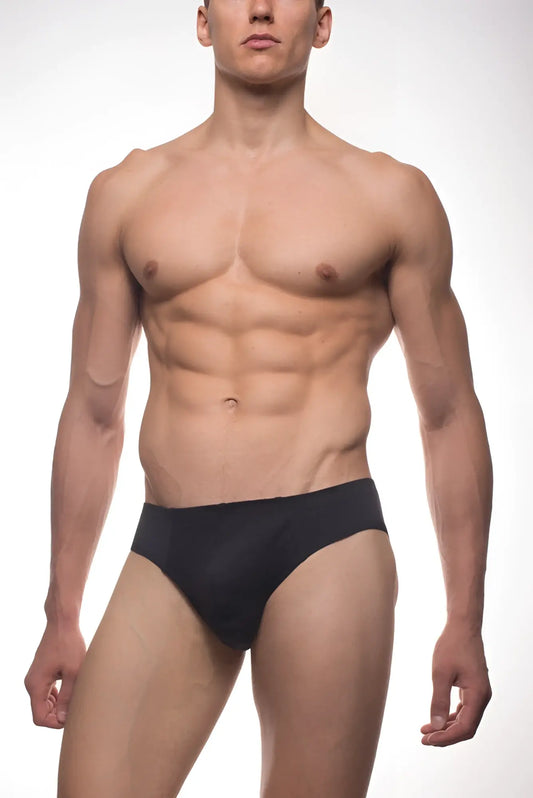
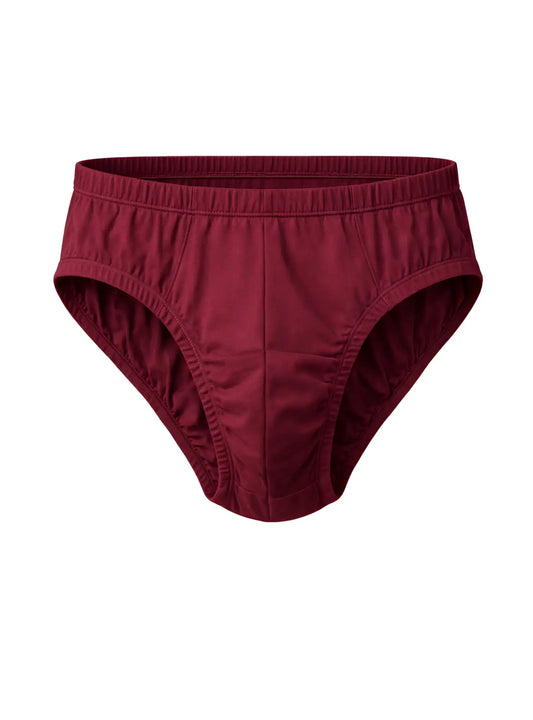
Swim briefs — the minimal-coverage, form-fitting style — are the most performance-oriented option in men's swimwear. They extend to mid-thigh, provide minimal drag in the water, and showcase the body's natural lines. They're the preferred choice for competitive swimmers, dedicated sunbathers who want minimal tan lines, and men who are comfortable with their physique and want to display it. The swim collection includes brief-style options alongside longer cuts for every preference.
Vintage-Inspired Trunks
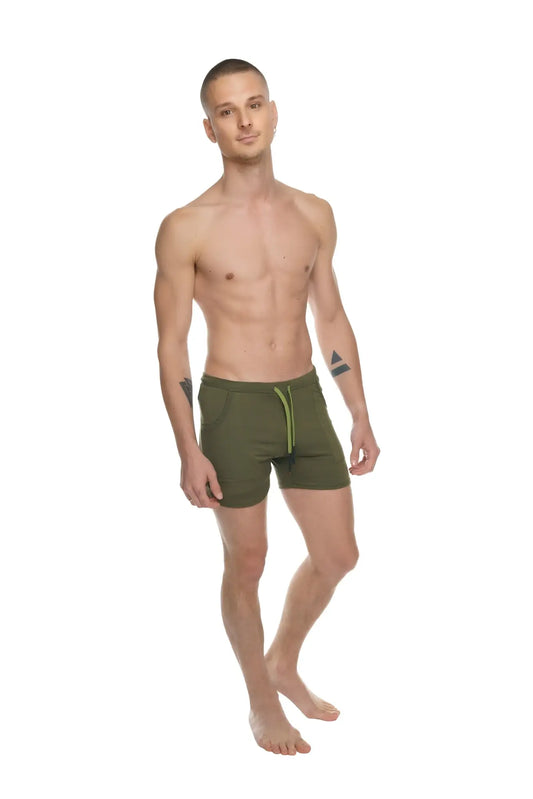
Vintage-inspired swim trunks draw from the shorter, higher-waisted styles of the 1950s and 1960s. They typically sit at or above the natural waist with a shorter inseam than modern board shorts, creating a retro silhouette that has seen a significant revival. These styles are particularly flattering on lean and athletic builds, and the distinctive aesthetic makes them a strong choice for men who want to stand out from the standard board short crowd.
Choosing the Right Fit for Your Body Type
Fit is the most important variable in swim trunk selection — more important than color, brand, or price. A well-fitting pair in a basic colorway will always look better than a poorly fitting pair in a premium fabric.
Lean and athletic builds have the most flexibility. Shorter styles — swim briefs, vintage-inspired trunks, and fitted mid-length options — all work well. These cuts showcase muscle definition without adding visual bulk. Avoid very long board shorts, which can make a lean frame appear shorter and less defined.
Muscular builds benefit from fitted mid-length trunks that hit just above the knee. This length balances the proportions of a broader upper body without overwhelming the frame. Avoid very short styles that can make muscular thighs appear disproportionate, and very long styles that cut the leg at an unflattering point.
Larger builds are best served by longer fitted trunks or board shorts that extend to just below the knee. The additional length creates a more balanced silhouette. Avoid very short styles and very tight fits — both draw attention to areas most men with larger builds prefer to minimize. Darker, solid colorways in longer cuts are the most flattering combination.
Shorter frames should prioritize shorter inseams. A trunk that hits at mid-thigh rather than the knee creates a longer visual line on the leg, making the wearer appear taller. Avoid board shorts that extend past the knee, which visually compress the leg and reduce apparent height.
Waistband and Inseam Fit
The waistband should sit comfortably at your natural waist without requiring constant adjustment. A quality waistband uses durable elastic with a drawstring that allows you to fine-tune the fit — particularly important for men whose waist and hip measurements don't align neatly with standard sizing. The inseam should allow full freedom of movement without the trunks riding up during swimming or physical activity. If the inseam bunches or shifts during movement, the trunks are too short or too loose in the seat.
Fabric and Material Guide
Swimwear fabric determines how the trunks perform in and out of the water, how long they last, and how they feel against the skin. Understanding the key properties helps you evaluate quality before you buy.
Polyester is the most common base material for quality swim trunks. It is lightweight, quick-drying, chlorine-resistant, and holds its color well through repeated exposure to sun, salt, and pool chemicals. High-quality polyester swimwear maintains its shape and color through a full season of regular use. This is the correct fabric for men who swim frequently or spend extended time in pools.
Nylon is softer than polyester and offers excellent stretch and recovery, making it a popular choice for fitted styles and swim briefs. It is slightly less chlorine-resistant than polyester but more comfortable against the skin for extended wear. Many premium swim trunks use a nylon-spandex blend for the combination of softness and four-way stretch.
Recycled polyester (made from recycled plastic bottles and ocean waste) offers the same performance as virgin polyester with a significantly reduced environmental footprint. The quality is indistinguishable from standard polyester in terms of performance, durability, and feel. If sustainability is a consideration, recycled polyester is the straightforward choice.
Spandex/elastane is present in most quality swim trunks at 5–20%, providing the four-way stretch that allows the trunks to move with the body in the water and return to their original shape when dry. Without elastane, swim trunks would lose their fit rapidly through repeated use.
Quick-dry performance is a function of fabric construction rather than a separate material. Tightly woven synthetic fabrics don't absorb water the way natural fibers do — they allow water to run off the surface and evaporate rapidly. When evaluating quick-dry claims, look for fabrics that feel dry to the touch within 20–30 minutes of leaving the water in normal conditions.
Color and Pattern Selection
Color and pattern are where personal style enters the equation most directly. The practical considerations are straightforward: darker colors are more forgiving when wet, solid colors are the most versatile, and patterns that are too busy can be difficult to style with accessories or cover-ups.
Solid neutrals — navy, black, charcoal, olive — are the most versatile choice. They work with any cover-up, any accessory, and any setting from casual beach to resort pool. If you're building a swimwear wardrobe from scratch, start with a solid neutral in a well-fitting cut before adding patterned options.
Jewel tones — deep ocean blue, teal, emerald, burgundy — are flattering on most skin tones and convey confidence without the visual noise of a busy pattern. They photograph well and transition naturally from beach to casual social settings.
Bold patterns — tropical prints, geometric designs, retro stripes — make a stronger statement and work best when the rest of the look is kept simple. A bold-patterned trunk pairs best with a solid-colored cover-up and minimal accessories. The pattern should be the focal point, not one element competing with several others.
Styling: From Beach to Casual
Quality swim trunks in a well-chosen cut and color can transition naturally from the water to casual social settings without requiring a change. The key is choosing a style that reads as intentional rather than purely functional.
A fitted mid-length trunk in a solid or subtle pattern pairs well with a lightweight linen shirt worn open, a simple t-shirt, or a casual button-up. Add clean sneakers or loafers in place of flip-flops and the look moves comfortably from beach to lunch or casual shopping. Keep accessories minimal — a water-resistant watch, simple sunglasses, and a quality beach bag are sufficient. The goal is a cohesive, intentional appearance that doesn't look like you forgot to change.
Quality Indicators and Care
What to Look For
Quality swim trunks are identifiable by several construction markers. The fabric should feel substantial and consistent — thin, uneven fabric is a reliable indicator of lower construction quality. Seams should be flat and reinforced, particularly at the crotch and waistband where stress is highest. The elastic should feel firm and consistent without loose or uneven areas. The drawstring should be securely attached and made from durable material that won't fray after a season of use. The mesh lining, where present, should be soft and non-irritating against the skin.
Care to Maximize Lifespan
Rinse your swim trunks in cold fresh water immediately after each use to remove chlorine, salt, and sunscreen residue — these are the primary causes of color fading and fabric degradation. Hand wash or machine wash on a gentle cycle in cold water with a mild detergent. Never wring or twist — press gently to remove excess water and lay flat to dry away from direct sunlight. Avoid tumble drying, as sustained heat degrades the elastane fibers that give the fabric its stretch and recovery. With correct care, quality swim trunks should maintain their color, shape, and performance through multiple seasons of regular use.
Building Your Swimwear Collection
A well-built swimwear collection covers at least two contexts: an everyday versatile option and a more statement-oriented piece for occasions where you want to make a stronger aesthetic impression. Start with a fitted mid-length trunk in a solid neutral — this is your workhorse piece that works in any setting. Add a second pair in a bolder color or pattern for beach days where you want to express more personality.
For men who swim regularly in pools, a dedicated swim brief or performance trunk in chlorine-resistant polyester is a worthwhile addition — it preserves your fashion trunks for casual wear while providing the performance construction that pool swimming demands.
For a deeper dive into the broader men's swimwear and intimate apparel landscape — including brands like Icker Sea that specialize in bold, design-forward swim styles — our Icker Sea swimwear and intimates guide covers the premium end of the category in detail. And if you're approaching your summer wardrobe from a broader style perspective, our complete guide to choosing the perfect swimwear in 2026 covers men's and women's options across every style category.
Related Posts
-

Unlock Your Inner Radiance: The Ultimate Guide to Sexy Lingerie in 2026
Embrace Your Sensuality: Why Sexy Lingerie Matters In the ever-evolving landscape of fashion and self-expression, sex...
-
Vedette 3133 Arm Compression Vest Color Beige
Introducing the Vedette 3133 Arm Compression Vest Color Beige Are you tired of dealing with unwanted arm bulges or...
-

Joe Snyder Women's Swimwear & Men's Underwear: Full Brand Overview
Introduction Joe Snyder is a brand that operates across two distinct categories at SeductiveUtopia.net: a women's swi...
-
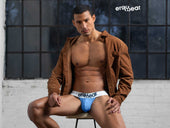
Elevate Your Confidence with ErgoWear 2024-9: The MAX COTTON Collection
At SeductiveUtopia.net, we proudly present the latest in men’s designer underwear: the ErgoWear 2024-9 collection, f...