Microfiber Briefs: The Ultimate Guide to Comfort, Performance & Style
The Rise of Microfiber Briefs
In the world of intimate apparel, few materials have shifted the category as decisively as microfiber. Cotton has long been the default — natural, breathable, familiar. But as lifestyles have become more active and the demand for underwear that performs across a full day of varied activity has grown, microfiber has established itself as the performance standard. In 2026, microfiber briefs are not a niche product. They are the first choice for men who prioritize moisture management, a smooth silhouette under fitted clothing, and a fabric that holds its shape and feel through repeated washing.
What Is Microfiber?
Microfiber refers to synthetic fibers finer than one denier — a unit of fiber density. These fibers are typically made from polyester, polyamide (nylon), or a blend of both, spun into threads significantly thinner than a human hair. When woven or knitted together, these ultra-fine threads create fabrics with properties that natural fibers cannot replicate at the same weight and thickness.
The most important of these properties for underwear use are softness, moisture management, and shape retention. The fineness of the fibers creates a surface that is exceptionally smooth against the skin. The synthetic construction allows moisture to be drawn away from the skin and released at the fabric's surface rather than absorbed and retained. And the inherent strength of polyester and nylon fibers means the fabric resists stretching, pilling, and distortion through extended use.
The Key Benefits of Microfiber Briefs
Superior Comfort and Fit
The softness of microfiber against the skin is the most immediately noticeable difference from cotton. The ultra-fine fiber surface creates a smooth, almost silky feel that reduces friction and the potential for chafing during extended wear. Most quality microfiber briefs incorporate four-way stretch — the fabric moves with the body in every direction and returns to its original shape without distortion. This combination of softness and stretch creates a fit that feels genuinely comfortable rather than merely tolerable across a full day of wear.
Moisture Management and Quick Drying
This is the defining performance advantage of microfiber over cotton. Microfiber's wicking capability draws moisture away from the skin to the fabric's outer surface, where it evaporates rapidly. Cotton absorbs moisture and holds it against the skin — which becomes increasingly uncomfortable during physical activity or in warm conditions. A microfiber brief that gets wet during exercise will dry within 20–30 minutes of reduced activity. A cotton brief in the same conditions will remain damp for significantly longer, creating the friction and bacterial environment that causes chafing and odor.
For men who are active during the day — whether through exercise, physical work, or simply navigating a warm climate — this moisture management advantage is the most practically significant difference between microfiber and cotton.
Durability and Shape Retention
Microfiber fabrics resist pilling, shrinking, and losing their shape through repeated washing and wearing. The synthetic fiber construction maintains its integrity at higher wash temperatures than natural fibers and recovers its original shape after stretching more reliably than cotton. A quality pair of microfiber briefs will maintain their fit and feel significantly longer than a comparable cotton pair, making them a better long-term investment despite often carrying a higher initial price point.
Seamless Silhouette Under Clothing
The smooth, fine surface of microfiber creates the cleanest silhouette under fitted clothing of any underwear fabric. There are no visible panty lines, no fabric bunching, and no texture showing through thin or fitted trousers. This makes microfiber briefs the correct choice for men who wear tailored clothing, fitted trousers, or any outerwear where the underwear's profile under the fabric matters.
Style Range
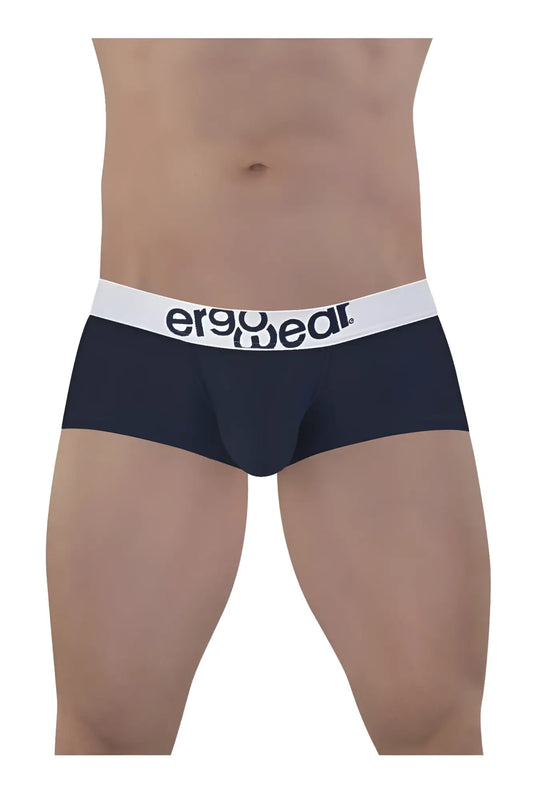
Microfiber's smooth surface takes color and print exceptionally well, maintaining vibrancy through repeated washing better than cotton. The fabric is also well-suited to the bold colorways and enhancement-focused pouch constructions — like the Bulge pouch used by Joe Snyder and JUSTIN+SIMON — that define the premium men's intimate apparel category. Browse the full men's briefs collection for microfiber styles across every cut and construction.
Microfiber vs. Cotton: The Practical Comparison
Cotton wins in natural breathability in cool, dry conditions, in softness for men with sensitive skin who react to synthetic fibers, and in ease of care — cotton is more forgiving of high-temperature washing and tumble drying than microfiber.
Microfiber wins in moisture management, quick drying, shape retention, silhouette under clothing, and durability through repeated washing. In warm conditions, during physical activity, or under fitted clothing, microfiber outperforms cotton on every practical measure.
The correct choice depends on your primary use context. For cool, dry, low-activity everyday wear, cotton is a perfectly valid choice. For active use, warm climates, or any context where moisture management and a clean silhouette are priorities, microfiber is the superior option.
What to Look for When Choosing Microfiber Briefs
Fabric blend: Polyester-nylon blends (typically 80–85% polyester or nylon, 15–20% elastane/spandex) deliver the best balance of softness, moisture management, and stretch recovery. The elastane content is what provides the four-way stretch and shape retention — look for at least 15% for quality performance.
Seam construction: Flatlock seams lie flat against the skin rather than creating a raised ridge. This eliminates the friction points that standard seams create during extended wear or physical activity. Tagless construction removes the additional irritation point of a fabric label at the waistband.
Pouch construction: The front pouch design determines support and comfort. A contoured or anatomical pouch provides better support and a more flattering silhouette than a flat-front design. Enhancement-focused pouch constructions — like the Bulge pouch used across the Joe Snyder and JUSTIN+SIMON ranges — apply this principle most directly. The Joe Snyder underwear collection and JUSTIN+SIMON collection both use microfiber-adjacent nylon-spandex construction across their brief ranges.
Waistband quality: The waistband should lie flat against the skin without rolling, digging in, or losing its tension through repeated washing. Quality elastic maintains its compression through extended use — a waistband that loses tension quickly is the most common failure point in lower-quality microfiber briefs.
Fit: Size according to your waist measurement using the brand's specific size chart. A microfiber brief that's too tight will feel restrictive despite the fabric's stretch. One that's too large will shift during movement and fail to provide the support the pouch construction is designed to deliver.
Care Instructions for Microfiber Briefs
Machine wash on a gentle or delicate cycle in cool or warm water — not hot. Heat is the primary enemy of microfiber: high wash temperatures and tumble drying degrade the elastane fibers that provide stretch and shape recovery. Once elastane is heat-damaged, the brief loses its fit and the pouch loses its contoured shape permanently.
Use a mild, pH-neutral detergent without fabric softener. Fabric softener coats the microfiber surface and reduces its moisture-wicking capability — the primary performance advantage of the fabric. Air dry flat or hang to dry away from direct sunlight and heat sources.
Conclusion: The Case for Microfiber
Microfiber briefs represent the clearest performance upgrade available in men's everyday underwear — softer than cotton, faster drying, better at moisture management, more durable through repeated washing, and cleaner in silhouette under fitted clothing. The case for making the switch is straightforward for any man who is active during the day, lives in a warm climate, or wears tailored clothing where underwear profile matters.
For the broadest selection of microfiber and nylon-spandex briefs at SeductiveUtopia.net — including Joe Snyder's Bulge and MaxiBulge constructions, JUSTIN+SIMON's XSJ12 Bikini range, and WildmanT's mesh and modal options — the men's briefs collection is the best starting point. For a deeper guide to the jockstrap format — the most performance-oriented style in men's underwear and the one that benefits most from microfiber construction — our men's jockstrap guide covers every variable in detail.
Related Posts
-
Vedette 930 Rubie Above the Knee Full Body w/ Front Closure Color Nude
Discover the Flawless Silhouette with Vedette Shapewear Are you looking to enhance your curves and achieve a stunn...
-

Embracing Body Confidence: How Seductive Fashion Can Boost Self-Esteem
In a world where societal standards of beauty often feel unattainable, it's time to redefine what it means to feel co...
-

MOB Underwear: Modern Men's Guide to Comfort, Fit & Style
MOB Underwear is made for men who want everyday comfort without giving up personality. The right pair should feel sup...
-

The Pit Crew’s Secret Is Out: PetitQ Underwear Takes Over Drag Race France All Stars
SeductiveUtopia.net is thrilled to unveil a fashion moment that’s turning heads across Europe: the iconic pit crew o...